Sub-Zero Processing and Cold Energy in Environmental Testing
Sub-zero processing, also known as cold energy treatment, uses extremely low temperatures to improve material properties, enhance performance, and extend product lifespan. In environmental testing and manufacturing, controlled low temperature exposure plays a critical role in achieving consistent and reliable results.
This process is widely used to increase hardness, improve dimensional stability, and reduce internal stress in metals and industrial components.
What Is Sub-Zero Processing?
Sub-zero processing involves cooling materials to temperatures below 0°F to drive important metallurgical transformations. It is commonly used as a continuation of heat treating processes to improve material performance beyond what traditional methods can achieve.
Applications include:
- Metal heat treating and finishing
- Expansion fitting and assembly
- Stress relief of machined parts
- Improving wear resistance and hardness
Key Benefits of Cold Energy Processing
Using low temperature processing provides measurable advantages across manufacturing and testing applications:
- Increased hardness through transformation of retained austenite
- Improved dimensional stability over time
- Reduced internal stress and risk of distortion
- Enhanced wear resistance and tool life
- More consistent and predictable results
These benefits make sub-zero processing an important step for industries requiring precision and reliability.
A Smarter Approach to Assembly and Processing
One of the most practical uses of sub-zero treatment is in expansion assembly. Instead of using force or heat, components are cooled to contract, allowing for easier installation and a tighter fit when returned to ambient temperature.
Compared to traditional methods, cold energy processing offers:
- Reduced assembly time
- Lower labor and equipment costs
- Improved fit and reliability
- Minimal risk of material damage
Why Controlled Low Temperature Matters
While methods like dry ice or liquid nitrogen are sometimes used, they can lead to inconsistent results due to uneven temperatures and limited control.
Dedicated sub-zero chambers provide:
- Uniform temperature control
- Repeatable processing conditions
- Improved safety and efficiency
- Better overall performance outcomes
Unlock the Full Potential of Sub-Zero Processing
Sub-zero treatment plays a critical role in improving material properties, extending product life, and optimizing manufacturing performance. However, the science behind cold energy processing and its applications is complex.
Download the Full White Paper
Want a deeper understanding of sub-zero processing, metallurgical transformations, and low temperature applications?
Download the full white paper to explore:
- Expansion assembly methods
- Heat treating and hardening processes
- Dimensional stability and stress relief
- Sub-zero chamber applications and advantages
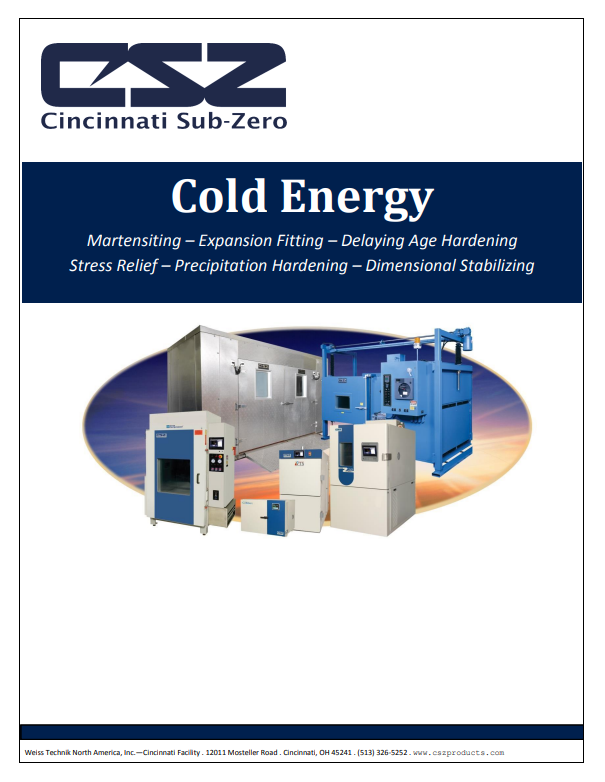
Download the White Paper